Intergenerational Trauma in Latino Families: What It Looks Like, and Healing It
The Weight We Inherit
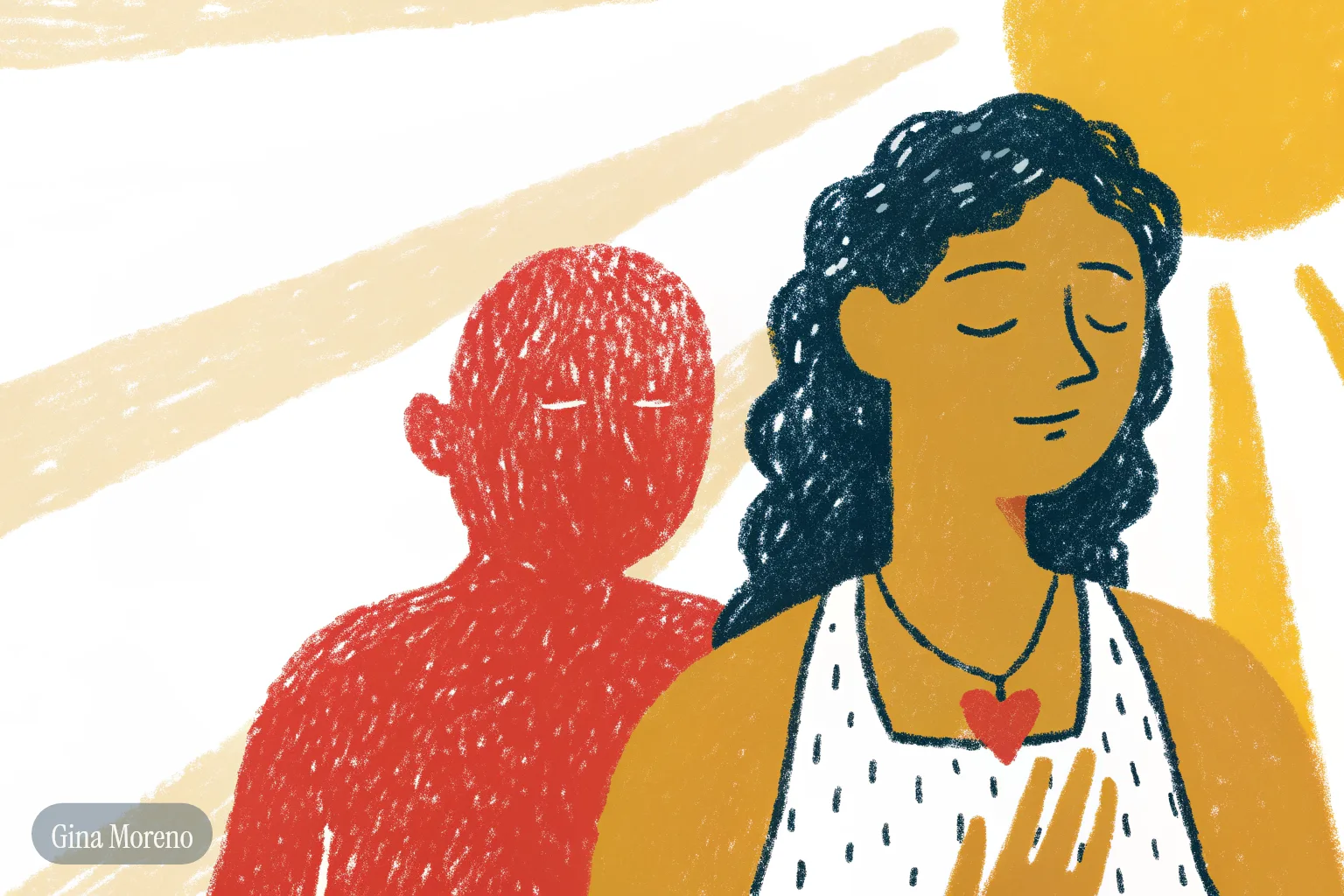
There’s a weight that many of us in the Latino community carry, a heaviness that doesn’t belong to us but was passed down through generations. It lives in the way our parents flinch at loud noises, in the anxiety our grandmothers never had a name for, in the unspoken rule that we don’t talk about certain things. This is intergenerational trauma, and it’s far more common in immigrant families than most people realize.
I want to be gentle with this topic, because it’s heavy, and because it isn’t the same story for every family. Some of us carry this. Some of us don’t, or carry a different version of it. I’m speaking from what I’ve seen in my own community, not for all of us.
Our families crossed borders carrying more than suitcases. They carried the trauma of poverty, violence, separation, and the constant fear of not being safe. And because survival was the priority, there was no time or space to process those experiences. So the trauma got buried, not gone, just hidden beneath layers of “echale ganas” and “no llores.” But buried trauma doesn’t stay buried.
What It Actually Looks Like
This rarely shows up as something you’d recognize as “trauma” on the surface. In my experience, it looks like:
Hypervigilance that doesn’t match the moment. Feeling on edge even when nothing is wrong, because a nervous system trained for survival doesn’t automatically know it’s safe now.
Difficulty resting without guilt. If everyone before you had to earn rest through suffering, sitting still can feel like you’re doing something wrong, even when you’ve done nothing wrong at all.
A need to control everything. When the ground has felt unstable for generations, control can feel like the only safety available. It’s not a character flaw. It’s a strategy that made sense once.
Trouble receiving help or softness. If asking for help was never safe for the people who raised you, learning to accept it now can feel almost physically uncomfortable.
The fear that anything good could be taken away. A quiet, background hum of “this is too good to last,” even when there’s no real reason to believe that right now.
None of these are personality flaws. They’re inherited strategies that kept someone before you alive. They just don’t always fit the life you’re actually living now.
Breaking the Cycle with Compassion
Healing intergenerational trauma starts with understanding that it’s not about blaming our parents or grandparents. They did the best they could with what they had, often with far fewer resources and far less permission to feel any of this than we have now. Healing is about acknowledging the pain, giving it a name, and choosing to process it so we don’t hand it to the next generation without at least trying.
For me, that’s meant therapy, honest conversations with my family, and a lot of journaling. Not one conversation that fixed everything, more like a lot of small, imperfect ones over time. For you, healing might look completely different: therapy, community, faith, art, distance from what hurts you, closeness with what heals you. There’s no single right path through this, only the one that’s actually true for your life.
The important thing is that we start. Our ancestors survived so we could live, and living, truly living, means giving ourselves permission to heal the wounds they never had the chance to.
If any part of this landed for you, you’re not alone in it, and you don’t have to carry it in silence. I’d love to hear, gently, in the comments: what’s one small way you’ve started breaking a pattern that isn’t actually yours?